Although we have the general concept and impression of what an image is, photography is a special kind of image that transforms the 3-dimensional world into a flat 2-dimensional object. However, whether an image is flat or not still raises more questions about what a photograph is and in my opinion there is more to this concept of what makes an image. I think that the viewer needs to focus on subject matter, the process of making a photograph, how the image is constructed, and the space around the image. These ideas help to shape this concept and the idea of an image is.
These ideas are the mainstay and focus of my work. In this way it leads that me though a body of work that began with my use of two dimensional photographs to create a three dimensional image. While working with this process and trying to stay within the confines of photographic realism of the artwork. I think that creating the images in this way might lead to and explore new feelings for the viewer resulting in an image that is images that are three dimensional in appearance and both graphic in style, a and constructed reality, and three dimensional in appearance. In a way this creates an image that is more two and half dimensions in nature. Now these images force the viewer to re-evaluate their perception of space. This expands the image from a two dimensional plane into a space around the image, interlocking the space and idea into one concept that, we can classify as an image. With out this I strongly believe that the focus and meaning is lost to the viewer.
We have the general concept and impression of what an image is. Is an image flat or is there more to the idea of what an photograph is? It is my opinion there is more to this concept of what makes an image. I feel that the viewer needs to focus on subject matter, the process of making a photograph, how the image is constructed, and the space around the image. These ideas help to create this concept and
the idea an image is.
These concerns are the mainstay and focus of my work and are what have led me though a body of work that began with my use of two dimensional photographs to create a three dimensional image. While working with this process I have tried to stay within the confines of photographic realism in my artwork. I think that creating the images in this way are leading to explorations of new feelings for the viewer and have resulted in images that are three dimensional in appearance and both graphic in style, and constructed realities that are three dimensional in appearance. In a way this creates an image that is more two and half dimensions in nature and cause the viewer to re-evaluate their perception of space. This expands the image from a two dimensional plane into a space that flows through the image interlocking the space and idea into one concept that we can classify as an image that focuses new kinds of meaning for the viewer.
On Nov 19, 2010 I first showed this body of work at the Trap Gallery in the Kansas City Area. This Body of work focus on Greensburg Ks, a town in south of Kansas that was hit by a F-5 Tornado. 90% of the town was destroyed. I wanted to create a body of work that was about rebuilding the Town. I traveled there for two and half years, documenting the rebuilding process.
Wednesday, March 2, 2011
Wednesday, December 22, 2010
Loretta Lux
Loretta Lux was born in 1969 in Dresden, East Germany. Her artwork is better known for her portraits of young children. As you begin to share at these surreal portraits you begin to get a feeling that the kids are keeping some thing from viewer. Their blank stare seems cut though audience. Creating a mystery and a feeling a unrest but a feeling a wonder about the images.

Lux started taking children's portraits about eight years ago, when she shot a couple of frames of her nephew. She feel in love and realize what comes across so vividly in her work. When it comes to her artwork Lux feels that children are the most honest models. That they create a mystery that comes through the image.
She wants people to decide what to see and never forget what they see.
http://www.lorettalux.de/

Lux started taking children's portraits about eight years ago, when she shot a couple of frames of her nephew. She feel in love and realize what comes across so vividly in her work. When it comes to her artwork Lux feels that children are the most honest models. That they create a mystery that comes through the image.
She wants people to decide what to see and never forget what they see.http://www.lorettalux.de/
Friday, November 19, 2010
Ross Sawyers
Focusing on the idea of space Ross Sawyers explores hypothesis of human encroach upon their neighbors. He is influenced on increasing density of new housing developments. With the combination of smaller spaces and the encroachment of others create a tension within the environment.
Theses environments are closer to the actual but are not completely copies of realities. The realities differ between the shift of architecture and voids at that serves no apparent function.
These structures reflect apartments and houses that we all have experienced in various and intimate ways. For Ross this level of familiarity is crucial, creating environments that resonate with the viewer. Allowing them see a parallel between the visual interpretation.
Wednesday, November 17, 2010
pic of the week
Wednesday, November 10, 2010
Karen Glaser
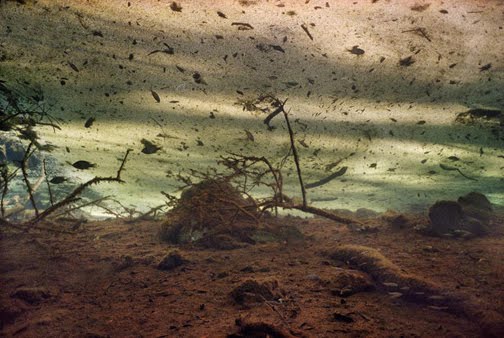
Karen Glaser body of work takes us on a journey into a world that we never see. She began photographing manatees and then the underwater habitats of the parts of Florida. Glaser wants to bring her audience to unique views of rare landscapes. She begins to bring the idea of endangered resource in the area that she photographs.

It is vital for Glaser to photograph more in order to represent the true enormity and subtly of my subject. Through her acute attention to how the elements behave in the wet and dry season and how they intersect, She was able to record fleeting moments within these complex ecosystems resulting in elaborately layered photographs.

She loves the idea that the glass of water that we drink on daily bases, is the same water that only 45 minutes this water is from the wild. That you are drinking water that originated in the swamp or river that she has slogged through to make the picture you just view

It is all about the idea of viewing images in a new way, and opening your mind to nature.
Friday, November 5, 2010
pic of the week
Here is the pic of the week this image is a coffee negative that has been printed with a digital printer
Thursday, November 4, 2010
Image!?
We have the general concept and impression of what an image is. Is an image flat or is there more to the idea of what an photograph is? It is my opinion their is more to this concept of what makes an image. I feel that the viewer needs to focus on subject matter, the process of making a photograph, how the image is constructed, and the space around the image. These ideas help to create this concept and the idea an image is.
These ideas are the main stay and focus to my work. In this way it leads me though a body of work that began with my use of two dimensional photographs to create a three dimensional image. While working with this process and trying to stay within the confines of photographic realism of the artwork. In a way this creates an image that is more two and half dimensions in nature. Now these images force the viewer to re-evaluate their perception of space. This expands the image from a two dimensional plain to a space around the image. Interlocking the space and idea into one concept, in which we can classify as an image. With out this I strongly believe that the focus and meaning is lost to the viewer.
Subscribe to:
Posts (Atom)